By Laura Fell, Head of Creative Operations,
George P. Johnson UK
Working with a client deeply committed to CSR and high sustainability standards, how do you approach a project like Cisco Live EMEA and continually raise the bar?
As an experienced Graphics Producer coupled with a personal interest in living more sustainably, I realised I needed to rethink the brief. Rather than treating Cisco Live as a “sustainable event” from a graphics perspective, I asked: how can we meet the brands needs while reducing impact? How can my choices serve a larger purpose?
It’s a complex challenge. When planning began in late 2022 for Cisco Live 2023, it was the first event back post-pandemic, in a new city and venue. I initially wanted structure and perfection. But sustainability isn’t that straightforward – it’s a journey of continuous improvement. I shifted focus from getting everything “right” to making steady, meaningful progress.
Examining the broader live events landscape, I did not find a perfect answer – just smarter questions. So I began at the end and worked backwards.
The problem: Graphics materials often become waste, with few end-of-life solutions.
The solution: Use ‘better’ materials, engage in constructive conversations, and establish a clear direction to recycle as much as possible. Producing only what’s necessary with storage, and repurpose in mind.
These ideas are simple to express but difficult to execute.
At a large European convention centre, guiding delegates and reinforcing brand presence is vital. The challenge is creating a valuable, on-brand experience while remaining environmentally responsible.
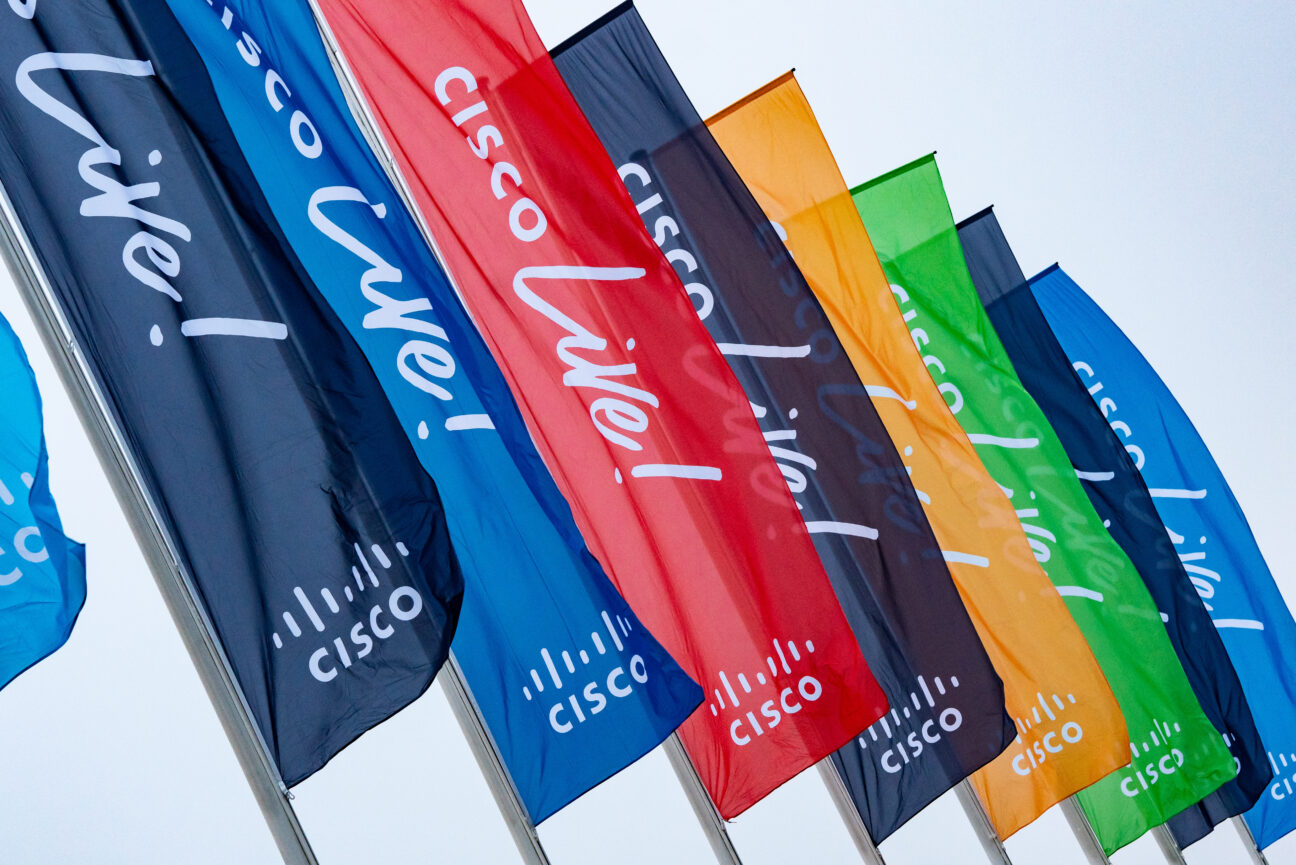
My starting point was material selection. And we made some mistakes. We tried to go completely PVC free on all materials, opting for PVC-free vinyl and polyester based fabrics and flags. As is often the case, the first year was a steep learning curve. Quality and price testing was promising, yet when onsite in very cold February in Amsterdam conditions, the suitability of some of these mandates was tested. Is it better to produce once with a more harmful material, or produce twice with a less harmful material?
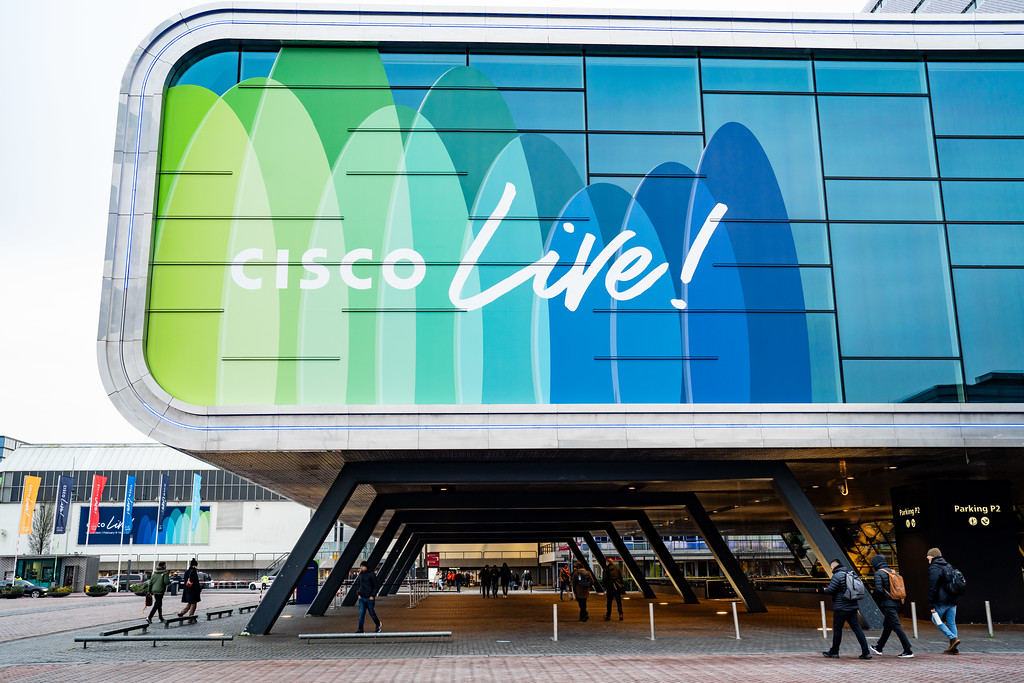
We have chosen to only produce once in future years, and we have therefore not set a mandate for PVC free events in subsequent years as a standard. It’s still what we want in principle, but in recent years, we’ve used standard PVC vinyl for our large external window graphic. It’s proven to be the right choice, as it has remained durable without requiring replacement, helping us avoid unnecessary waste and pressure on our suppliers.
Throughout our journey towards more sustainable graphic production, we encountered several challenges – each offering an opportunity to adapt and improve.
Designing for impact in a new venue came with the dual challenge of meeting high expectations while staying true to our sustainability goals.
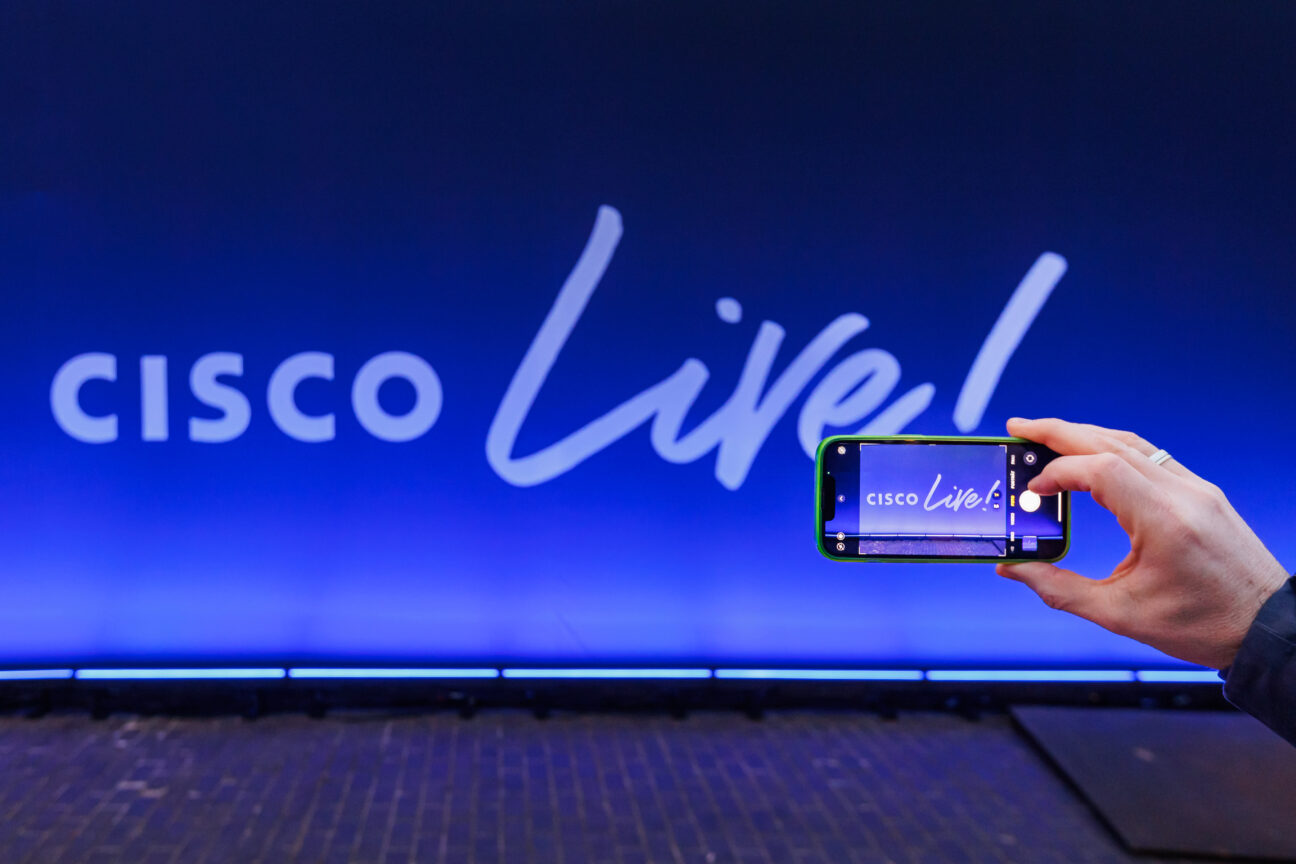
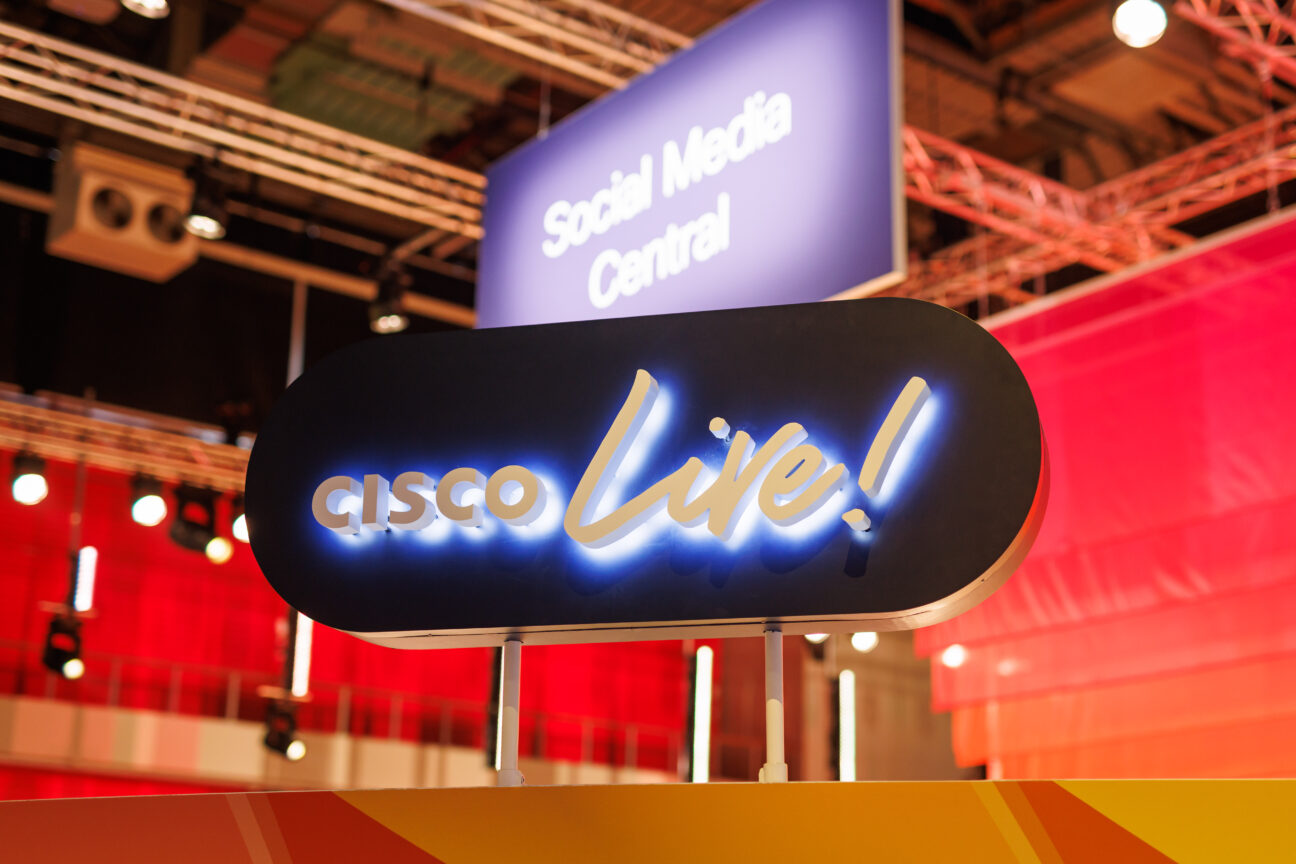
Challenge: New space, updated brand. Participants would arrive with high expectations. How do we capture the moment, ensure the space feels owned by the brand, and guarantee the ‘Instagram moment’ without being wasteful?
Solution: Plan with storage and future years in mind, have frank conversations about what’s actually needed, and make sure everything fulfils a purpose. Create a graphic opportunity, but add directional or other relevant content to ensure it’s multi-functional.
Aligning sustainability goals across multiple suppliers required more than broad directives – it called for open dialogue and shared understanding of context-specific solutions.
Challenge: Effectively communicating to all print suppliers that while our goal is to create the least environmentally harmful event possible, this isn’t as simple as following broad guidelines like “PVC-free.” Each environment shapes what responsible choices look like.
Solution: Listen to the experts, and invite them to partner with us in continually exploring better, more sustainable options.
Without clear communication, even well-intentioned contributions can lead to setbacks, especially when time is tight and recycling standards are high.
Challenge: Eager suppliers trying to help the cause by collating materials and potentially contaminating whole bags of graphics that could otherwise have been recycled. A lack of time can prevent us from recycling effectively.
Solution: Implement more rigorous pre-event planning and clearly communicate expectations with key suppliers. Additionally, invest in labour support to ensure all tasks are completed efficiently and to the required standard.

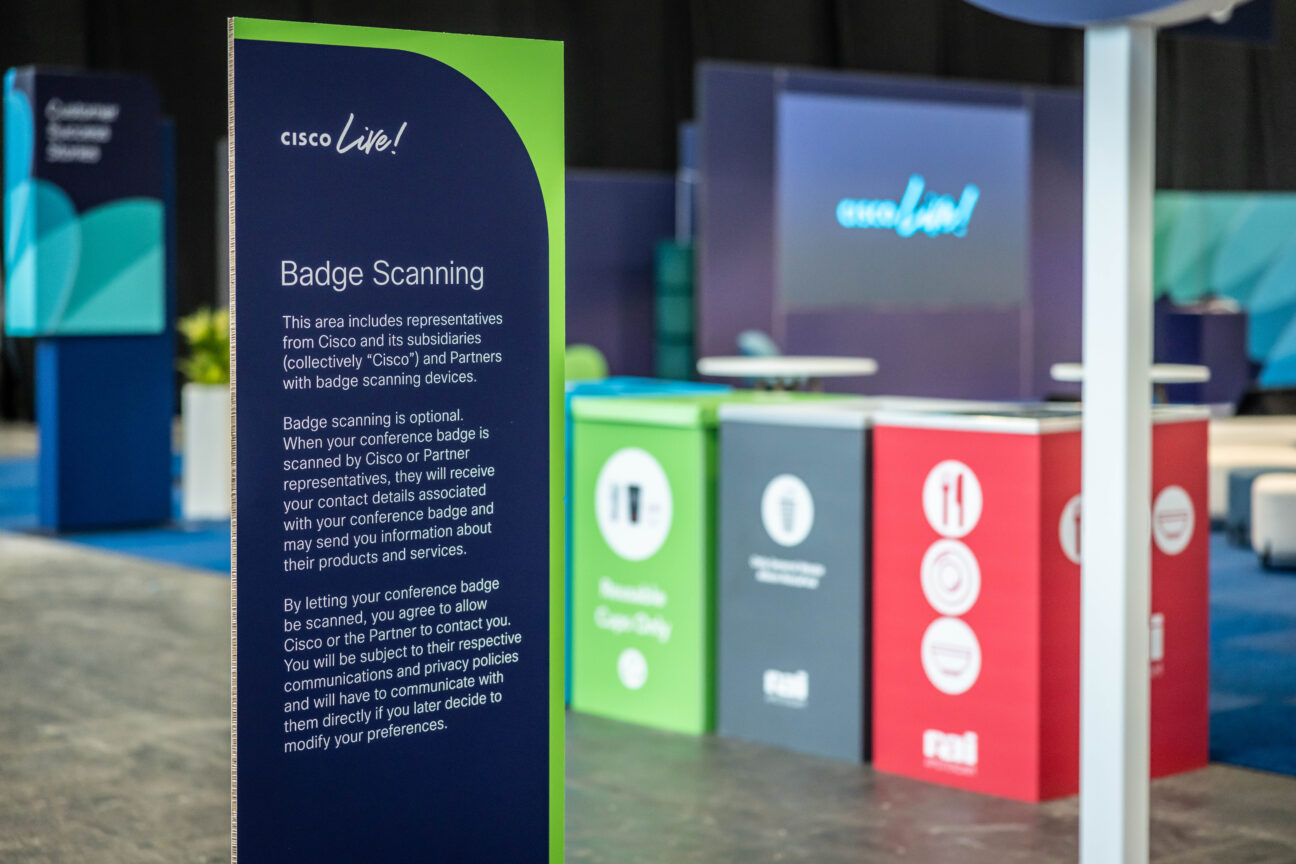
Through FESPA connections, we worked with Jon Hutton and Reconomy to create a recycling path for display boards, fabrics, and PVC-free vinyl. It took significant coordination: 12 print suppliers across 12 large exhibition halls, extensive planning, and a tight event breakdown window. Dump sacks were distributed across the venue, materials separated, then collected and transported back to the UK for recycling.
In parallel, we explored reuse. We’ve transformed waste materials into resale bags for future Cisco Live events, donated surplus fabrics to schools, and found partners who could repurpose materials for merchandise or marine use.
In 2023, we learned just how much coordination this requires. With support from suppliers and two local labourers, we collected most materials, ensuring silicon-edged fabrics were kept separate to avoid contaminating recycling batches, but not all, simply because of lack of time.
By 2024, we adapted. We cut graphics from frames and folded the fabrics into one bag, while placing the silicon edges in a separate bag for green incineration. The display boards and other paper products were recycled locally in the Netherlands, where clearer recycling paths exist. We even hand-removed vinyl from mounted boards to ensure clean recycling.
By 2025, we expanded our fabric recycling efforts. A Dutch recycler accepted 15 full bags of PVC-free printed graphics. Looking ahead, our goal is to send all materials there, cutting transport emissions and simplifying logistics rather than transporting back to the UK.
Over the years, we’ve solidified the foundations of our system. We listen, we communicate, and we lead. From the start of planning, we commit to sending no graphics to landfill – a promise we’ve upheld for three years.
Each year, we learn. And each year, we adapt. Our focus remains the same: reduce harm wherever possible. The results show it. With annual data tracking, we’ve measured emissions reductions and made better, more informed decisions.
While the challenges persist, so does the progress. We hope this momentum helps influence the broader events industry, where the appetite for sustainable solutions is only growing.