2026

Scala Restaurant, Davos | 19–22 January 2026 | 725m²
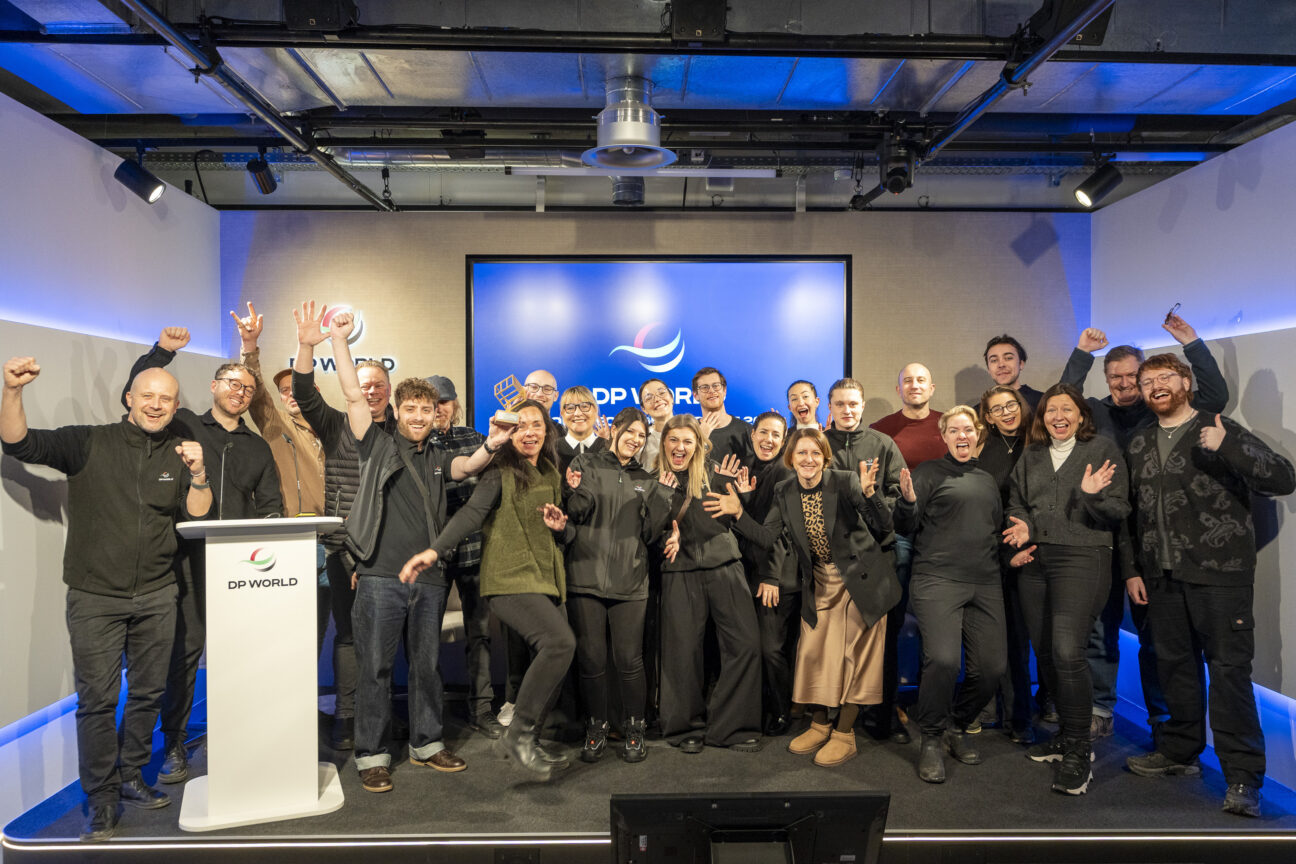
At the World Economic Forum, DP World’s House was built around one idea – moving containers changes lives. While the main stages debated tariffs, trade policy and supply chain friction in abstract, macroeconomic terms, DP World set out to ground that conversation in the human reality behind it, from an artisan producer in East Africa reaching European markets for the first time, to a family-owned manufacturer in South Asia entering global trade.
The brief was to build a physical environment that would establish DP World’s strategic influence at Davos and generate genuine engagement with time-pressured business leaders, moving beyond the broad awareness-building of the previous year toward measurable, high-value interaction.
The Challenge
Within the tight confines of a busy Davos street, DP World needed to bridge the gap between the dry, macro-level policy debates inside the Congress Centre and the micro-level realities playing out on the ground. On stage, Canadian Prime Minister Mark Carney warned that great powers were now using tariffs as leverage and supply chains as vulnerabilities to exploit. WTO Director-General Dr Ngozi Okonjo-Iweala called for digital systems that could democratise access to trade for SMEs. DP World’s task was to make those arguments tangible to show that a tariff debated at the Congress Centre has a direct, physical ripple effect on a farmer or small business owner elsewhere in the world.
The Experience
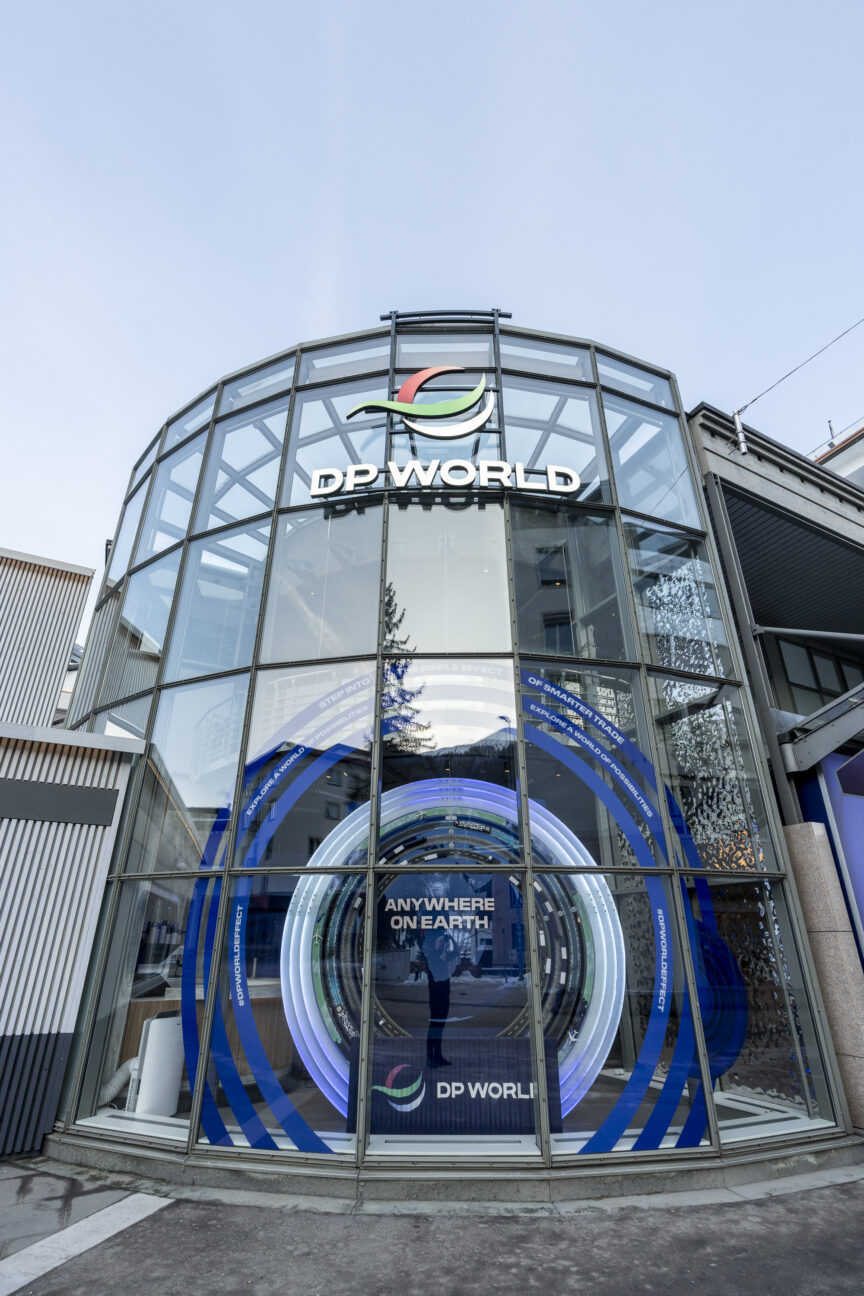
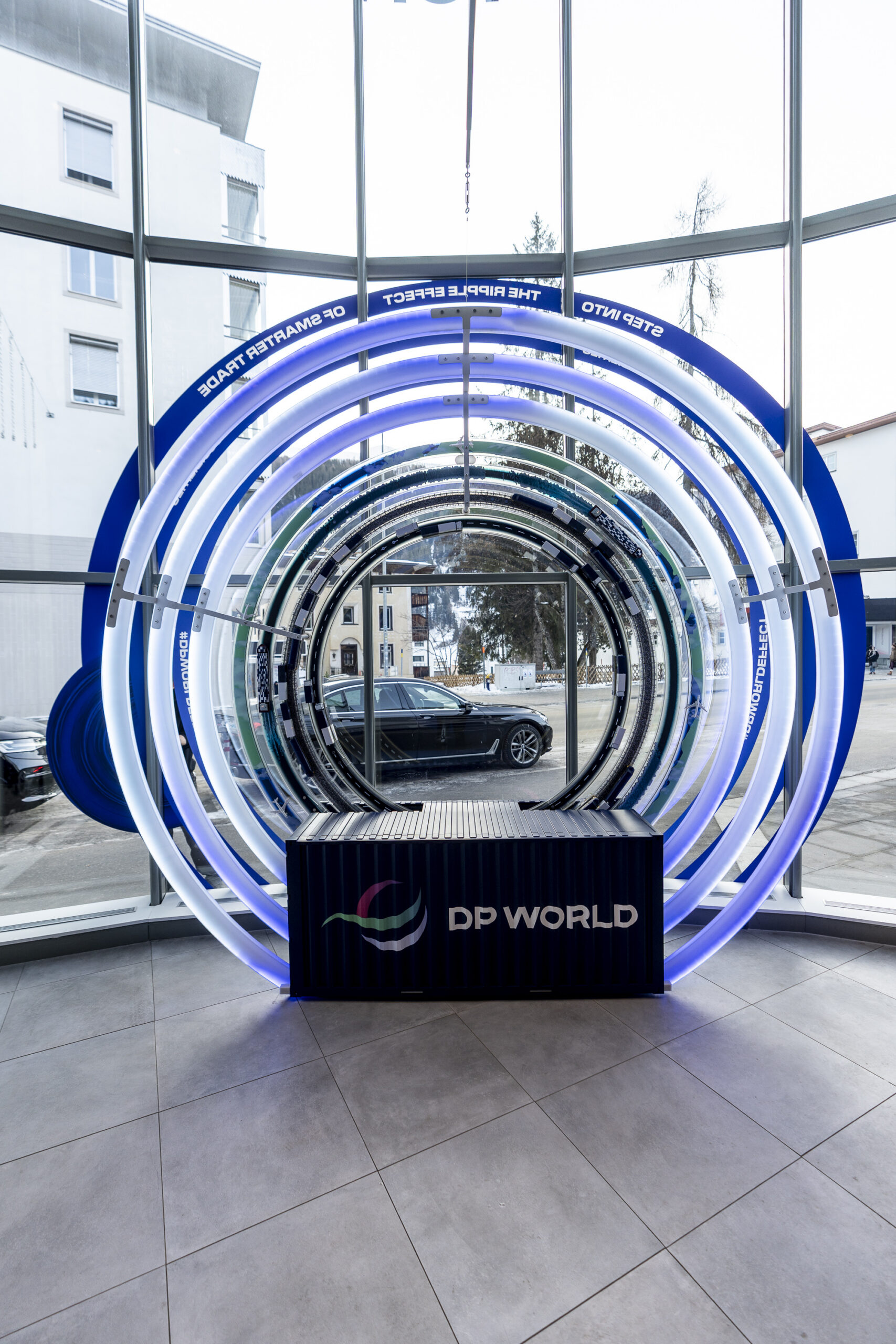
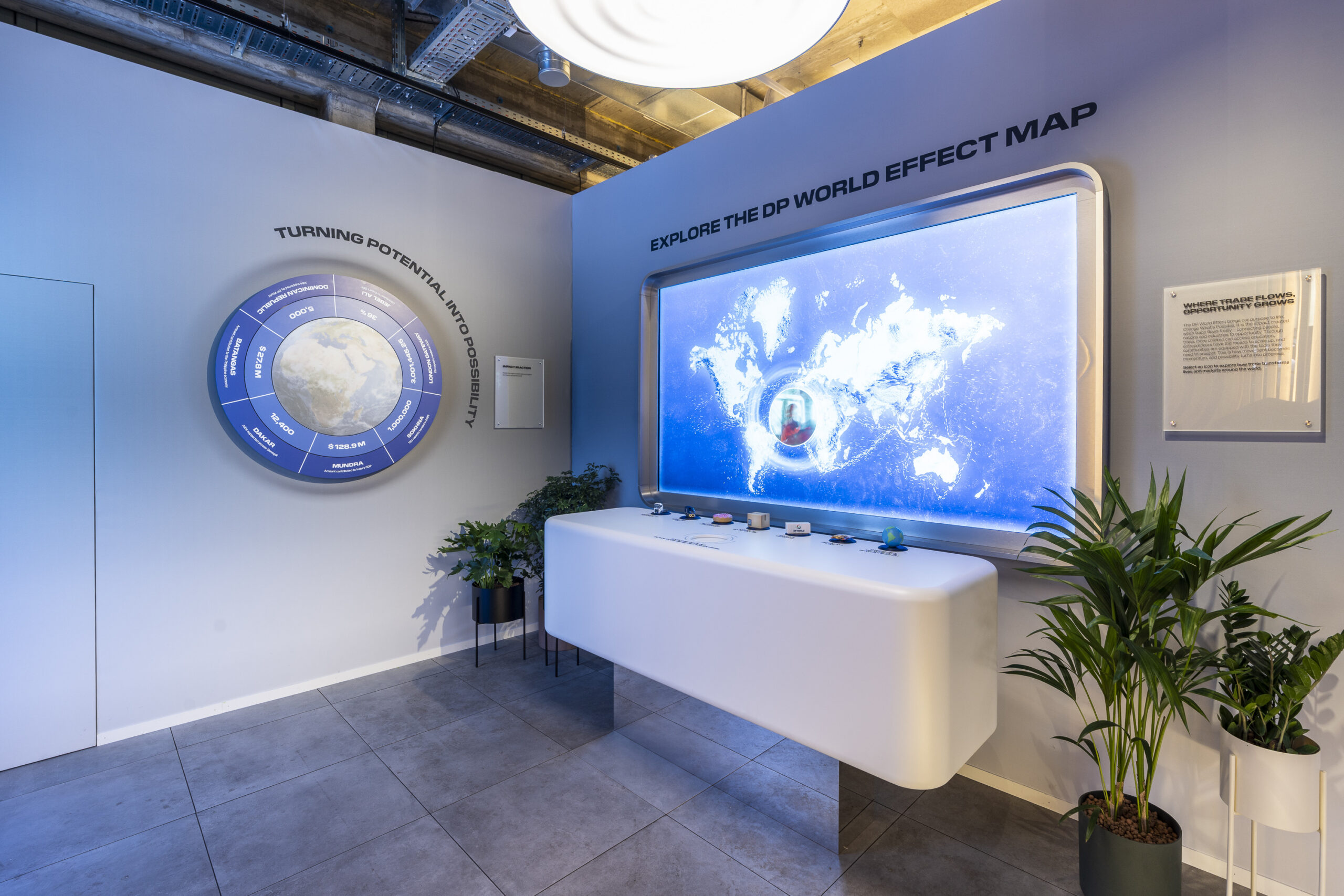
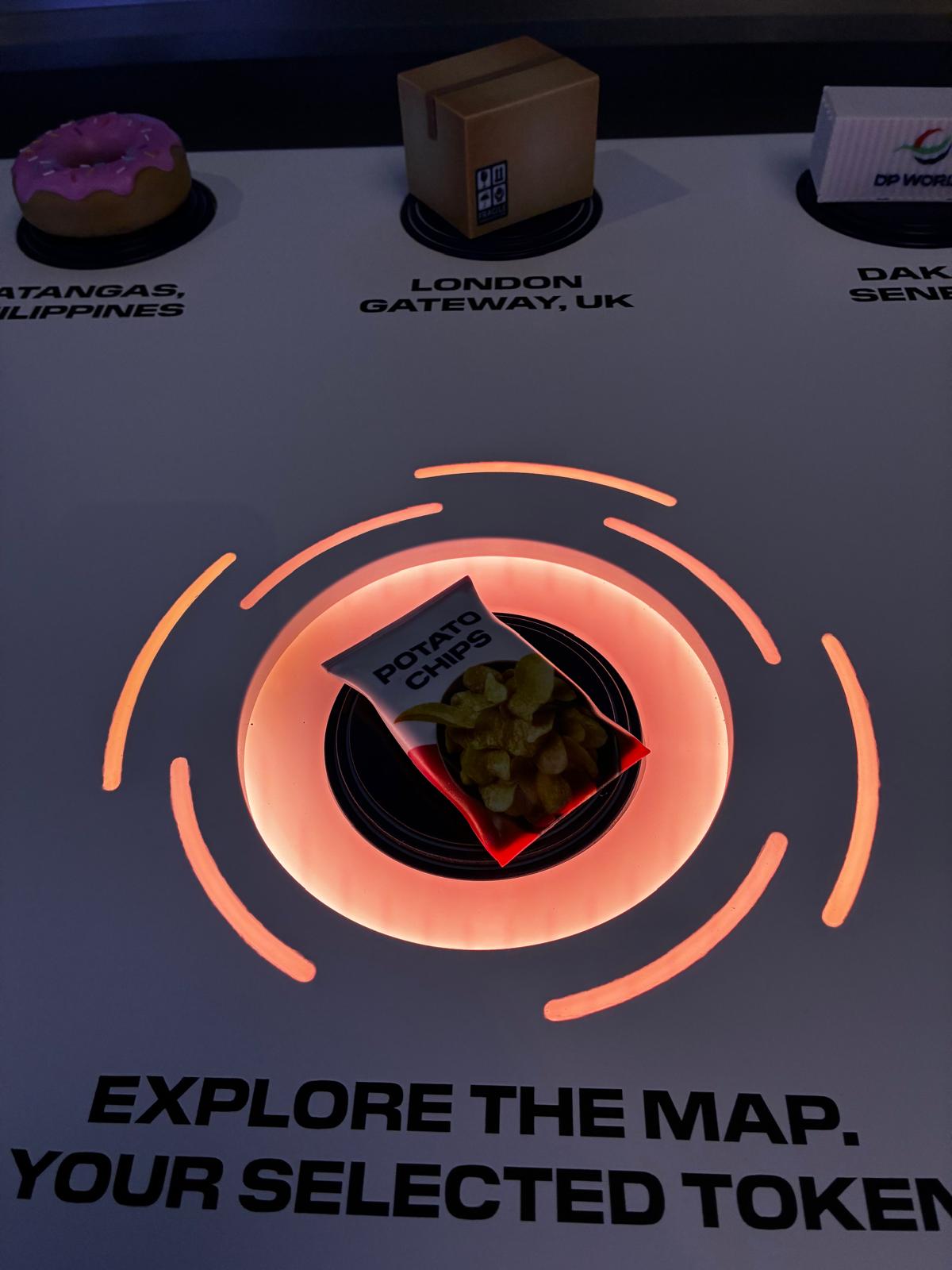
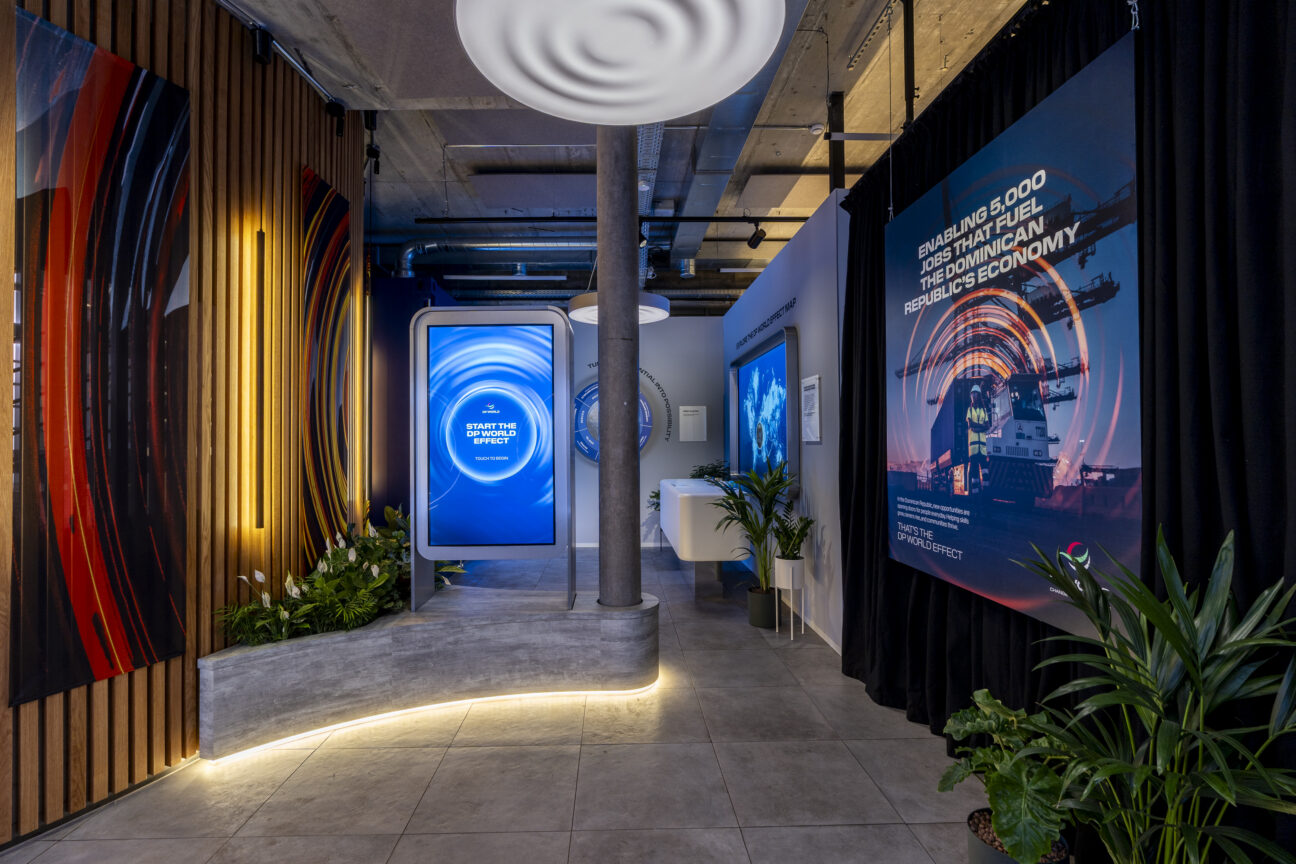
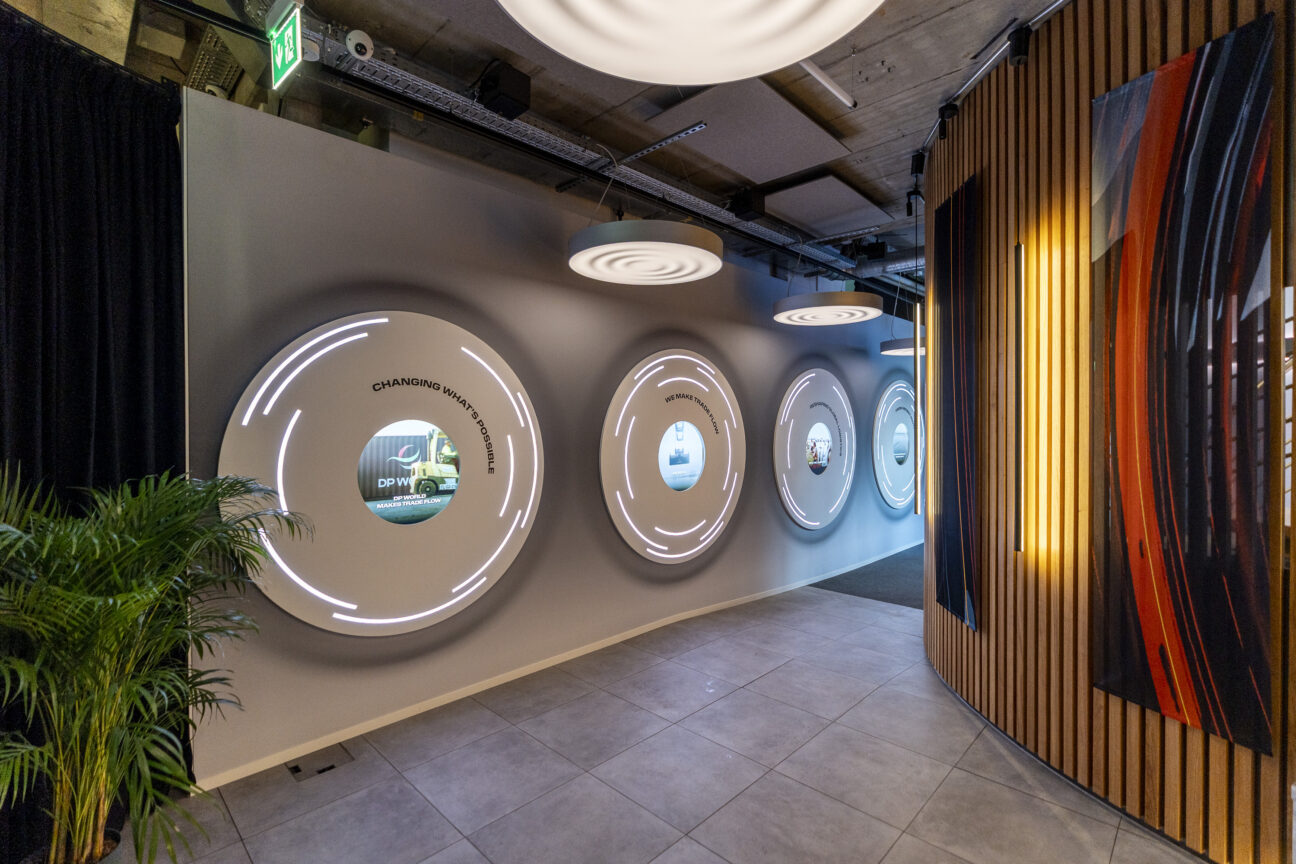
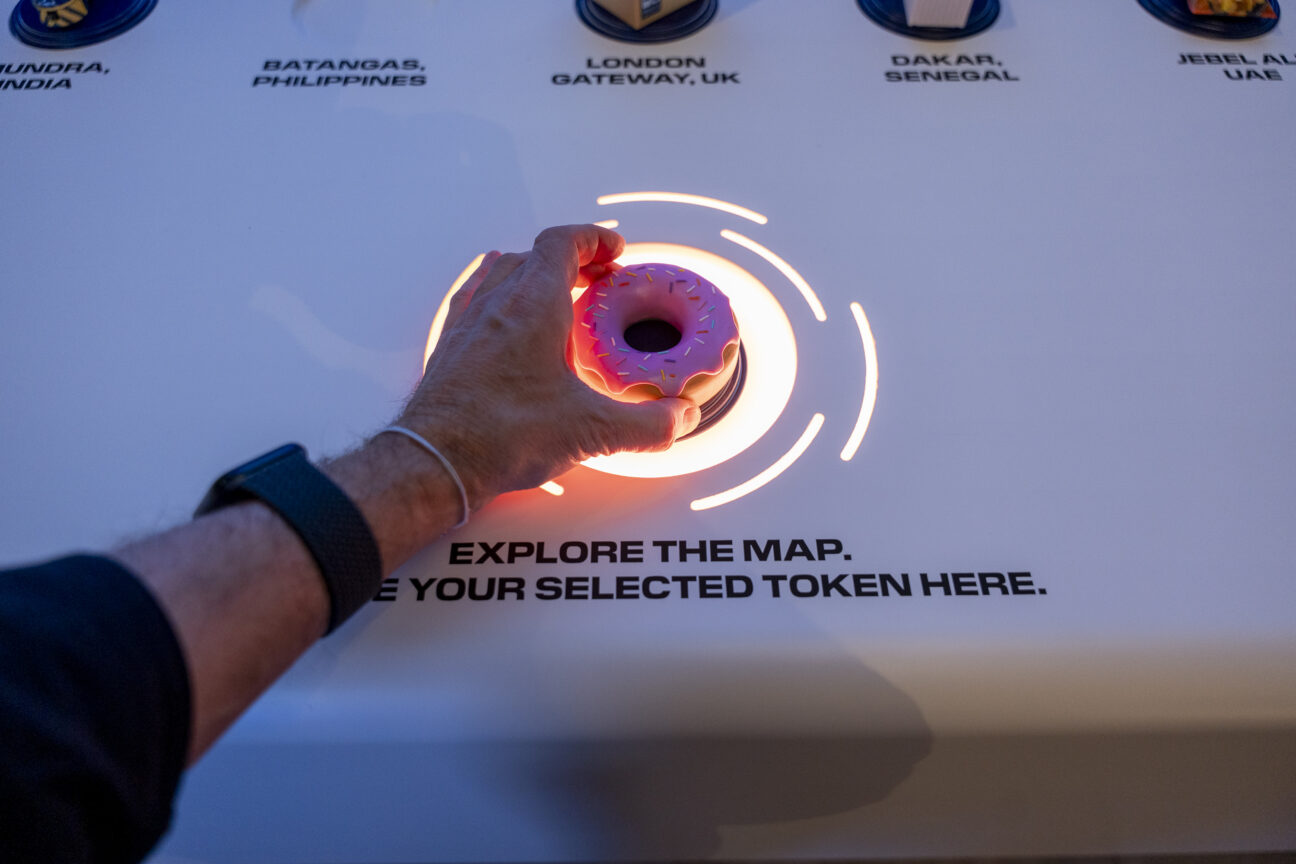
An experiential language guided visitors from curiosity to full immersion. Multimodal in Motion, a kinetic LED installation in the venue’s curved glass façade, stopped Davos foot traffic before anyone stepped inside. Once in, the Trade Corridor used reactive lighting and four screens to show the scale of DP World’s network, while its “Effect Map” let delegates place one of seven 3D-printed objects – a container, a truck, a globe, a packet of crisps – onto an RFID reader to trigger first-person accounts from real business owners across India, Senegal, the Philippines and London and beyond, whose livelihoods had been shaped by the network.
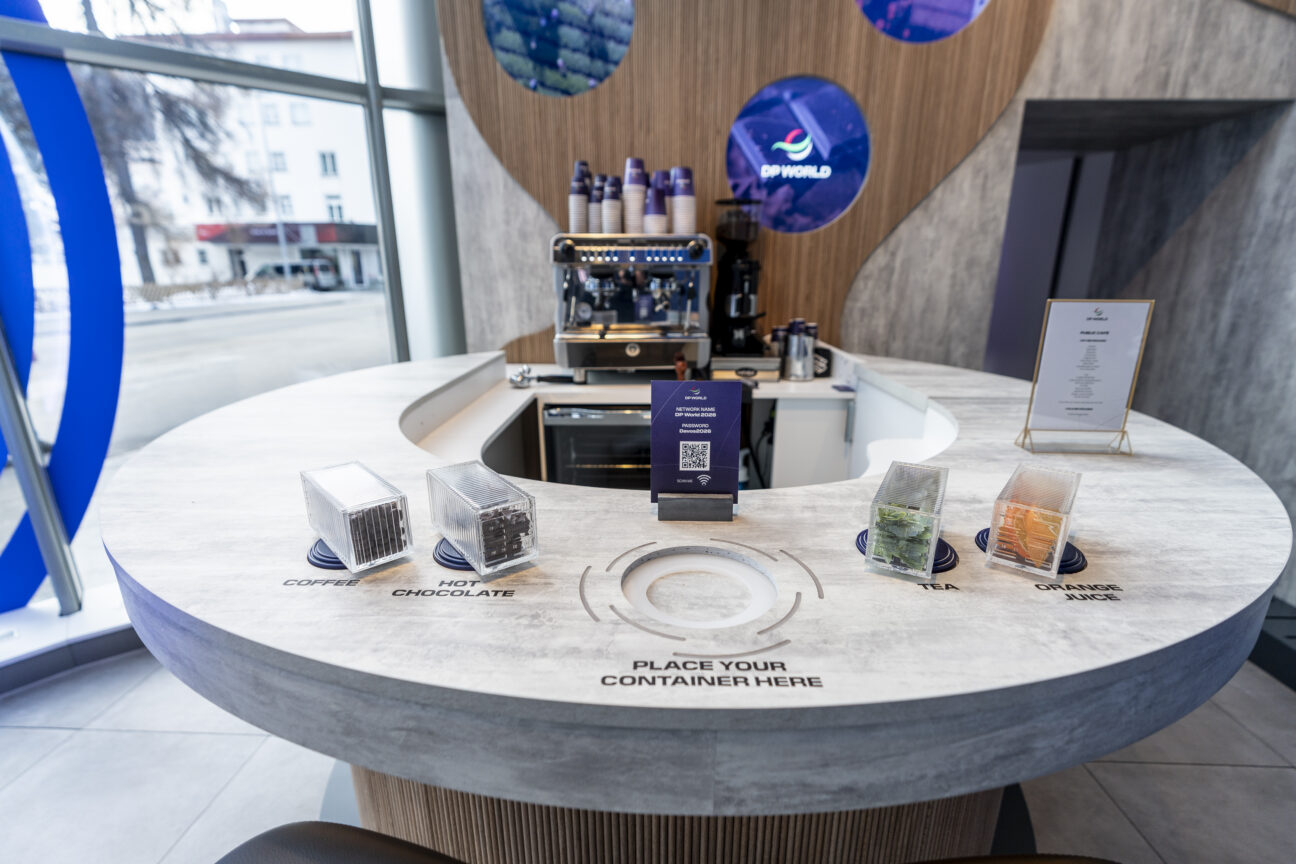
The Ripple Wall gave visitors a self-directed moment with spinning elements and physical trigger points, before the Impact Vault, a two-way-mirrored tunnel with eight bezel-less screens and spatial audio, immersed guests in cinematic content on DP World’s real-world impact, from moving medical supplies to connecting remote economies. The Global Café extended the Effect Map narrative into a hospitality setting, and an on-site media centre was adopted by CNBC for live interview filming throughout the Forum, putting DP World’s messaging behind the broadcasts.
Delivering it required a multidisciplinary team spanning Strategy, Creative, Digital, Motion Design, Live Production and Logistics, working to a standard that held up under the scrutiny of a global audience.
The Results
- 1,134 unique visitors – a 249% increase year-on-year
- 1,639 total visits across four days
- 29% capture rate of passers-by
- 10 minutes 47 seconds average dwell time, with 35% of visitors staying over 10 minutes and 8% over 30
- 78% of visitors in leadership or founding roles, 56% at executive or C-suite level
- 82% reported an increased understanding of DP World, up 9 points on 2025
- 67% said they were actively considering future collaboration, leading to high-level bilateral meetings in the House’s private meeting spaces
The Takeaway
Every element of DP World House, from the RFID-triggered storytelling to the spatial audio in the Vault, was built around a single objective: making an invisible supply chain visible, and giving it a human face. In doing so, it turned high-level policy conversation into direct, real-world business partnership.